This blog can now be found here: http://www.mrsdshomestead.com
Monday, April 13, 2015

Thursday, March 12, 2015
Mrs. D's Not Off Grid Adventure

Our big off-grid adventure turned out to be mostly plugged in. Winter weather stalked us through Arizona, New Mexico and Texas so we never did get the bugs worked out of our inverter/battery set-up because of the need to run the heater every night and most days. We got most of our leaks sealed up in the tiny trailer, but came to realize that no matter what we did with the inside, we still needed a few more feet of living space. We did not get our mobile winter garden planted for the same reason: freezing outdoor temps and no room to put the pots inside.

Fortunately opportunity smiled upon us and we were able to pass the tiny trailer on to someone who hopes to restore it for camping with his family and we acquired a new Minnie Winnie with almost all the bells and whistles. The battery is actually properly wired to charge while the truck is driving. The bathroom is spacious, with a nice shower and all the plumbing works. And we have a slide-out - score! It feels like a mansion.

We tested out Minnie's off-grid capabilities in a couple of RV-friendly store parking lots, with very satisfactory results. After considering the pros and cons of continuing off-grid, with dump and refill rates of $10-$20 every few days, we opted to give our Passport America membership a real workout. Except for a few nights outside Dallas, Tx where we stayed in a very nice campground for $34.50 a night, we averaged about $15 a night in various rv parks in Texas and New Mexico.
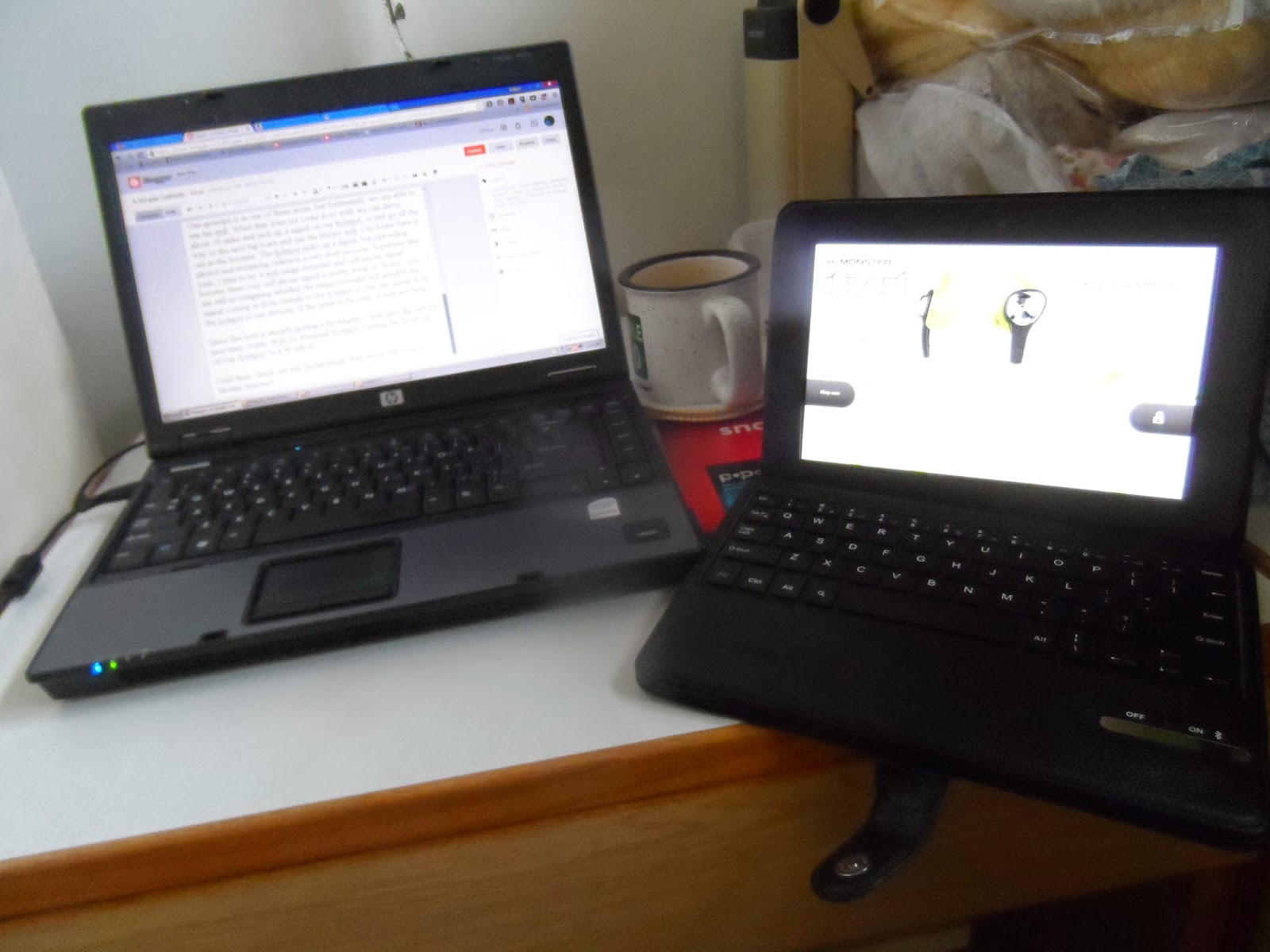
Our biggest difficulty with living and working on the road has been reliable internet connectivity. The Verizon phone hotspot has been great in most areas, but we have spent a good amount of time in areas where AT&T is the prevalent carrier, and spend much of our Colorado time in a Verizon black hole. So I have had to cave in and get an AT&T hotspot, which is working quite well. Both the Verizon and AT&T plans are prepaid/no contract plans, so I can tweak and adjust data packages to suit our coverage needs.

That should bring us up-to-date with what has been going on with the mobile homestead for the last month. The next few weeks' posts should be a bit more interesting. Praying for warmer weather!
Tuesday, February 10, 2015
Homesteading Texas State Parks

We started down the road on our big off-grid adventure and boy, is it a learning experience. Have you ever heard the saying, "a bad day fishing is better than a good day working"? Well, even though everything is not going according to our plans, we are still having a great time!

We hooked a battery up to an inverter in the tiny trailer homestead, for power on the road, but we are still working the bugs out of the system. That is to say, it was working as planned, until a repair necessitated my plugging the multi-tool into the inverter to cut a steel bar, thus draining the battery with no way to recharge. I had contemplated using the truck to recharge said battery, but am still looking into the feasibility of that. Something about alternators giving out and batteries blowing up, anyway, beyond my current diy comprehension.

We did make it to Balmorhea State Park in Texas, after an unplugged night at a rest area, where we parked at a lovely site with water and electric, for only $14 a night. I plugged in the trickle charger and charged up the battery. I had it on the wrong setting, though, so the following night, we had about 1 hour of battery power before it died. After consulting the instructions for the charger, I put it on the correct setting and when we reached our water and electric site in Goose Island State Park, Texas, I charged it up all the way. Still have not tested to see how long it will last, as we have been running the heater every night with the cooler than normal temps in Texas. We have also been spending a lot of time on this slow travel adventure, visiting friends in the area and I have not wanted to leave the tiny vintage trailer unattended while on battery power just yet.

The Texas State Park system is wonderful. For $70 a year (less for seniors and disabled) you can get a pass which will grant you free entry to all the parks and a few discount nights on camping. Most of the campgrounds have a number of sites with water and electric and the settings we have been in have been spectacular. Of course, right now the campgrounds are not crowded, except on the weekends. The 2 campgrounds we have been in have also had free showers and very clean bathrooms...cleaner than an RV park we stayed in. We had very bad wifi reception at the campsites but not too far away we could park and get good wifi with the hotspot. The ups and downs of including the internet in your simple living plan.
Susie is turning out to be quite the camper. She enjoys the tie-out, loves hiking with us on the leash and is very well behaved. Mr. Cuddles kept slipping out of his harness. I discussed this with one of our neighbors at Goose Island and she described a harness style her mother had gotten for her cat, which was nearly impossible for the cat to slip out of. We found one at the next PetCo we stopped at and it has been a sanity saver. Sadly for Mr. Cuddles, he will no longer get to enjoy his leisurely jaunts through the brambles, while laughing at us humans getting cut up, trying to catch him.
Friday, January 16, 2015
The Avocado Harvest

When I bought my first home, it had an avocado tree in the back yard. As young adults, newly married, my husband and I were excited that we had this source of "free" food. We ate avocados for breakfast, avocados for lunch, avocados for dinner. Avocado sandwiches. Avocado salad. Avocado smoothies. A neighbor lady taught me how to make guacamole. We gave away avocados. After one season, I was sick of avocados. Then we moved to the mountains. Soon I forgot my aversion to the green fruit and longed for the tree in the back yard.

At today's prices, avocados are a fantastic commodity. My oldest son has three avocado trees in his yard. I think he should get a stall at the farmer's market. We spent a sunny, Southern California Sunday harvesting avocados from one of his trees. We gave avocados to the neighbors. We brought avocados to church. And we still have several bushels of avocados in the garage. The boys practiced their pitching skills with grandpa. The dogs ate some and got gas. I think they are all going to ripen at once (the avocados, not the dogs).

This time I am ready. Sharp knife and spoon in hand. Avocados make great road food. I do not like the texture of avocados after they have been frozen and I suspect they do not can well, so it will mean a lot of creativity once they are ready to eat. Avocado will replace my breakfast banana. It will go into smoothies. We will add them to our daily salad. Stuff them with chopped meats and other veggies. Mash them into guacamole and eat it with chips and carrots. Put them in sandwiches and along side everything. Use them for facial masks and moisturizer. They are packed with vitamins and good oils. We will give more away and when we can't eat any more, we will trim the trees way down so that they don't produce in such over abundance for a few more years.
Avocados anyone?
Wednesday, January 7, 2015
Socializing on the Road

"Socialization" always seems to be the last ditch
argument about why all children should attend stix and brix schools. Smart
homeschoolers know that's exactly why they shouldn't. As homeschool families,
we choose who our children socialize with. As a full-time RVing family, this
can get pretty interesting. We spend much of our time taking care of parents
and visiting children and grandchildren in 2 different states. We also make
regular visits to the Homestead

In between our "regular" stops, what happens? It
really depends on a variety of factors. We normally don't stay in RV parks, so
we don't have the advantage of meeting other families in the park and using the
facilities. We might be working a craft show or festival for a few days, and
get acquainted with other vendors and their families. We strike up conversations
on the train, at the store, with other remote campers. One luncheon companion
on the train gave Yak tips on game building software. Another paid a little too
much attention to him, which resulted in a “creeped out” feeling that made him
want to stay a little bit away from that person.

I think the key in socializing our children, whether on the
road, in the homeschool or in regular school, is the same as our own
socialization in our lives. Being open to it. At the same time that we’re being
cautious of the dangers in meeting new people, we are also open to making new
friends. Most of us have a sense of when something is not right and of who we
want to spend more time with. Sometimes we need to follow our instincts in
walking away. Other times we just take it as it comes and make a new, lasting
friendship. We need to use our better judgement to supervise our childrens’
relationships and guide them in choosing their friends. We may not always be
popular because of that, but hopefully we will not have regrets that we did not
supervise them more closely, either.
You might also enjoy:
 |
| 10 Reasons I Homeschool Year Round |


Monday, December 8, 2014
Keeping Up With Record Keeping

Sometimes record keeping can be the hardest part of
homeschooling. Just when you think you have a system down, you find yourself
pulled in 20 different directions and the work piles up to unmanageable levels.
This is when having a system is handy. It could be as simple as piling
everything in a box for the year, or as detailed as daily entries in a
teacher's record book. You can grade individual papers only, or cross post the
grades in a yearly record.

Checking your state's homeschooling law is critical on this
issue. Some states require detailed records and samples of work, some require
nothing. Some states have mandatory testing, others don't. Even if your state
does not require any record keeping, it is still a good idea to have some kind
of system in place, just in case of overzealous school officials, nosy
neighbors, or persons with "the best interests of the children"
"at heart".

Some online curriculum programs even keep records for you. I
am sure there are computer programs that can do this as well. If you are clever
enough you could probably design your own computerized record keeping system. I
am still doing mine by hand, with pencil and paper. I know several parents who
use specially designed worksheets they have printed out.
Here is my simple system to give you ideas:
1
- grade each paper turned in;
2
- in a weekly calendar book, post each grade, as well as non-graded work completed;
3
- place all completed work for the year in an 18 gallon plastic box, place the weekly calendar book in the box at the end
of the year.
4
- Place any projects, books not being resold, pictures, copies of videos and miscellaneous items in box. Tape and label
box and store away.
We rely heavily on pictures and videos to document projects and work, so it is critical that I copy all school related media to a usb or sd card or make a hard copy of pictures to store in the box. This takes a little extra time, but I feel it is worth it for the permanent record. It is okay to revise your system from time to time, as your needs change and your abilities evolve. Our system has changed over the years but the important thing is that we do maintain a permanent record of work accomplished.

If you enjoyed this post, there is lots more information on homeschooling in my new book:
 |
| The Working Parent's Guide To Homeschooling |
Monday, November 24, 2014
A System to Deal With Waste

Decreasing waste is wonderful in theory, but if you don’t
have a system in place to deal with waste, it becomes very complicated. So what
is waste? Waste is stuff you can’t reuse, isn’t good enough to donate somewhere
for someone else to use and is likely to end up in the landfill. When I made my
most recent stop at the Homestead ,
I was enthused about recycling, composting and minimizing what would go to the
landfill. To my dismay, my systems were no longer in place.
My compost heap was fully composted and ready to relocate to
the garden. I also wanted to set up a new system of 2 compost bins, one to fill
and one to age. So began the deconstruction of the compost heap. The old log
sides were removed, but before we could haul the composted soil to the garden,
the waist high weeds had to be raked down and moved to a spot where they could
be added to the new compost bin. We did not have enough time to complete this
project while we were there, so it will be completed on our next visit. Sadly,
our compostables went into the trash.

My burn barrel was buried and broken by an overenthusiastic
tractor which seemed to think it was no longer of any use. Trash was carted to a
shared dumpster, to be taken to the landfill. I do have another burn barrel, but I
need the lid cut off, so I can use it. It is an old, empty industrial 55 gallon
steel drum.
In our area we have no full service (all metals, glass and
plastics) recycling center, so other than aluminum cans, these items go to the
landfill. I did repurpose quite a few plastic items, and cleaned out my
cabinets to find a couple bags of containers I could take to the local thrift
store.

Junk mail, strangely, is not a problem at the Homestead .
As we heat with wood, we need something to start the fire with. The envelopes
and paper from the junk mail work just as well as newspapers. I also stuff
toilet paper rolls and small cardboard boxes with dryer lint (yes, I do
sometimes use the dryer instead of the clothesline) for this purpose. Most of
the glossy papers get thrown in the trash, though, because they don’t burn as
well.
It doesn’t sound like much to clean out the compost bin and
rebuild it, and to cut the top off a steel drum, but for us it is a bit of a
project. The compost has sat for so long it has become an ideal garden spot.
Since I prefer this spot for the compost bin, we have to dig the compost out
and relocate it. With shovels. Safety concerns demand that we have the proper
tool and coordination to cut the top off the steel drum. This will entail
enlisting help. Hopefully next time we stop home, we’ll get our systems back in
place and keep the Homestead
“green”.
Until then, we’ll work on improving our waste generation and
disposal in the tiny trailer.
Also see:
|
| Decreasing Waste |


Thursday, November 6, 2014
Decreasing Waste

I just finished reading "The Humanure Handbook". I know, eewww, right? It got me back to thinking about decreasing the amount of total waste I generate. Living in a trailer with limited water capacity and living on the homestead, where we have to haul all our water in, has made me very conscientious about my water usage.
 |
| Humanure Handbook |
This isn't just about water, though. I also stumbled upon a site about living without plastic. Now that's drastic! On the homestead, we recycle or burn almost all our trash. In the trailer, we have not been consistent with this. There is also the issue of how much we bring in that ends up going out as waste. Not just packaging, but also all the plastic shopping bags - ugh! I am getting better at remembering my reusable bags, but not all the way there, yet.

I use a lot of plastic ziploc bags. We frequently brown bag our lunch on errands and day trips and I do a lot of cooking from scratch, so prepwork also gets bagged. I also stumbled upon How to Store Produce Without Plastic. I had just bought some veggies, so I decided to put some of these tips to use right away. We had a whole bunch (bunches, actually) of carrots, so I washed them and put them in the veggie bin, with the broccoli and covered it all with a damp towel. The lettuce, celery and green onions I washed and wrapped in damp towels. After sitting overnight, I went to make my lunch and everything was still fresh and crisp. I cut up some of the veggies for our bento boxes and put the rest in a bowl, covered with a damp towel, in the fridge for tomorrow. At lunch time, everything was crisp and delicious. I have already eliminated the lunchtime ziplox with the bentos and sandwich boxes (um, plastic ones...) and now I can eliminate the refrigerator storage ziplox. I like. Not that I don't have other uses for ziploc bags, but this cuts down a great deal.
Now that I have my sewing machine set up for a few days, I can whip up some more cloth veggie bags and towels and some cloth sandwich bags. Yes, I know, bacteria. That is why we wash things and let them dry thoroughly. We wash plastic and we wash cloth. And believe it or not, bacteria does grow in plastic...
There are things that I do prefer to use plastic for, however. The sawdust toilet would be one. (See the Humanure Handbook.) Also for water jugs that I have to be able to lift and maneuver. Not to mention that it cuts down on the weight in the tiny trailer/mobile homestead. But I am, once again, conciously trying to reduce my own waste and use more enduring containers.
I had a few more pictures to post, but my systems are working against me, so I am going to go ahead and post this as it is.
What are you inspired to do to reduce your waste?
Monday, October 13, 2014
How To Cure Soap

That's easy, don't let it get sick! Aaarrgh! Bad soapmaker joke. Seriously, though, it's one thing to pull out the folding table and make a batch of soap, but once the soap sets up and gets cut, it needs to sit around for about 5 weeks to completely neutralize the action of the lye and oils and evaporate some of the water so that the bars get nice and hard.

So maybe I'm giving away trade secrets, here. But really, anybody can look this up in about 5 seconds, anyway. My aim is to figure out how I'm going to store several batches of soap (I'm on a soapmaking spree), with adequate air flow, to properly cure into nice, hard, suds-making, creamy, soothing, gentle, cleansing cakes of goodness.

Keeping in mind that I am now living in a 14 foot trailer with an 11 year old boy and our dog, matters get even more complicated. Last winter, we stayed in the RV and let the soap cure on the kitchen counters in the trailer. Now it needs to be out of the way, yet protected from dirt and damage, with plenty of air circulation. Hmm. We have a nice, big space on top of the fridge, which works for the first week or so, until I get the next batch made. Then I have to get creative.

Under the beds we have plenty of storage room. We keep working at getting rid of stuff we're not using, so the area is becoming fairly organized and clutter free. At least on my end. On top of my tool box is just enough room for some flattish shoe box size containers of soap. Bars go in boxes, lids off, sit in storage as long as necessary to cure. Protected from elements, dirt, damage and in a climate controlled environment.

I love using my gentle, handmade, whole milk soaps and I would love to have you give them a try, too, and tell me what you think. Check out my website Mrs. D's Homestead - Soaps 'n' More and Etsy shop today.
If you enjoyed this post, check these out, too:
 |
| Soap On The Road |
 |
| Teaching My Son To Sew |
 |
| What Is A Lotion Bar? |
 |
| Dry Skin Relief - Coconut Oil, Shea Butter and Goat's Milk |
Wednesday, October 8, 2014
It's A Book!!
 |
| The Working Parent's Guide To Homeschooling |
Get your free excerpt at the link above and get ready to explore a whole new world of opportunities and freedom for yourselves and your children. "The Working Parent’s Guide to
Homeschooling" will
inform and empower you with tools
and resources to homeschool. You'll explore time management,
child care arrangements while working, how to teach and more, with real life
working parents’ solutions to each of these issues.
Written specifically for working
parents, my own experience peppers every chapter and I also share several other families’ experiences to illustrate solutions to succeed in
working and homeschooling.
This dream has been a long time coming, so I hope you will celebrate with me. Now that I've give birth to my first book, I plan on doing it again. Get your copy today and tell me what you think!
Ebook formats coming soon.
Check out these posts, too:
|
| Yak Shows Off His Science Projects |
 |
| Working and Homeschooling |

Friday, September 26, 2014
Mesothelioma Awareness Day

And now for a little something different:
Today is Mesothelioma Awareness Day. I was contacted by a
fellow blogger who is a Mesothelioma survivor and asked to spread the word
about this deadly disease. Since I also have another friend who is a
Mesothelioma survivor, I agreed.
In looking for a few background facts to share, I was
astounded to find that the ban on asbestos-containing products was overturned
just a few years after it was put in effect. Asbestos exposure is the only
known cause of mesothelioma, a cancer of the lung lining.
I was also amazed that it can lay dormant for 20-50 years
after a person’s first exposure, and that family and friends can be exposed to
it second-hand. I am not an expert on this, so I will refer you to http://www.mesothelioma.com/ for further info; you can also read Heather’s
story there (pictured above, with Lily).
And here are some interesting facts about asbestos and
mesothelioma:
"Asbestos can be found in many homes, schools, commercial and industrial buildings.
China, Russia and Canada use asbestos in consumer products.
Mesothelioma is most commonly diagnosed between the ages of 50 and 70.
Many women received second-hand exposure from parents or spouses who worked closely with asbestos."
Info taken from MAD Asbestos Facts, courtesy www.mesothelioma.com.
Monday, September 1, 2014
Yak Shows Off His Science Projects

One of the great things about roadschooling is visiting family and friends. Another is the ability to have an impromptu science camp when you're visiting the home of an engineering grad. Here, Yak shows off some of his creations, built from an "Eco Toys" kit, with the supervision of his brother-in-law. (Following commentary is Yak's.)
Gravity Robot
You have to have some small nuts, stick on eyes, string, can and legs that will move that you can see in the clip. Robot needs: can,stick on eyes and the legs in the clip for feet. Attach the eyes on the can and take off the tabs on the can, attach the legs on the bottom. The mover: string and small nuts. Attach the string to the hole on the legs that you can see on the clip and on the other end put on the nuts (about 20 or 25) and then tie a big enough knot so that the nuts won't fall off no matter what and there you have the gravity robot put all the nuts on the string off a end of like a table and make sure you use a flat surface. Enjoy!
Disc Racer
This is a balloon and a disc and something else. You blow up the balloon and then put it on the thing that you will put in the middle of the disc and then it will float! Not in mid air but on a flat surface. Enjoy! This is not the one that has the 2 discs and the toilet roll.
Hover Disc
Cartesian Diver
Check out these posts, too:
 |
| Back To School - Blogging as Language Arts |
|
| Working and Homeschooling |
 |
| My Budding Photographer |
 |
| If You Give a Homeschooled Boy a Tire |
Subscribe to:
Posts (Atom)